The Portal Series: Valve's First-Person Puzzle Classic
The origins of Portal (2007) and Portal 2 (2011), how the portal gun puzzles work, why they're classics, their influence, and how to play them today.
Portal is a first-person puzzle-platform game released by Valve in 2007. The player must get through test chambers with a single "portal gun" that opens two linked holes in walls and floors. You're holding a gun, but it isn't a game about fighting; it's a game about figuring out how to connect spaces. In 2011, Portal 2 arrived with a greatly expanded story and set of mechanics, and both games frequently appear on lists of the greatest games of all time.
In this post, we look at how Portal was born from a student graduation project, how its puzzles work with portals and momentum, and why it's called a classic despite its short length. We then cover how things continued with Portal 2 and user-created maps, and how to enjoy the series today.
At a Glance
| Item | Details |
|---|---|
| Release | Portal: October 10, 2007 (The Orange Box, Windows/Xbox 360); Portal 2: April 19, 2011 |
| Developer | Valve (Portal 2 retail and console versions distributed by Electronic Arts) |
| Platforms | Windows, macOS, Linux, PS3, Xbox 360, Nintendo Switch (Portal: Companion Collection) |
| Genre | First-person puzzle-platform |
Origins
Portal's starting point was Narbacular Drop, a free game released in 2005. Made by students at DigiPen Institute of Technology in the US, the game already contained the concept of portals linking two points. Valve developer Robin Walker saw the game at the school's career fair and invited the team to Valve's offices, and after watching their presentation, Valve head Gabe Newell offered the team jobs on the spot. Newell valued the fact that the team had carried their idea all the way through and had already built the interaction between portals and the physics engine.
Some elements carried over from Narbacular Drop. The way the two portals are distinguished by orange and blue remained as is. On the other hand, the original premise of a princess escaping a dungeon was dropped, and a new setting was created: the test chambers of the fictional research company Aperture Science. It took about two years and four months to complete after the team joined Valve, and no more than ten people worked on development.
For the first year, the team focused only on puzzles, with no story. But when playtesters said it was fun but asked where these test chambers ultimately led, the team decided to add a story. Writers Erik Wolpaw and Chet Faliszek joined and created GLaDOS, an artificial intelligence who guides the player in a polite tone but is somehow unsettling. The promise of cake for solving all the puzzles also came about at this time. When testers got lost because of objects that were decorative but useless, the developers deliberately made the test chambers simple and clean.
Portal was first released on October 10, 2007, for Windows and Xbox 360 as part of the bundle The Orange Box, together with Half-Life 2: Episode Two and Team Fortress 2, and it also came to PS3 in December of the same year.
Gameplay
The player becomes the silent protagonist Chell and goes through test chambers one by one from a first-person perspective. The portal gun can create two portals, a blue one and an orange one; enter one and you come out the other. Neither is fixed as the entrance or the exit.
Portals That Conserve Momentum
The heart of Portal is physics. When an object passes through a portal, its speed is preserved, and only its direction changes according to the surface the exit portal is on. So if you open a portal beneath your feet, fall into it, and pop out of another portal opened on a wall, you can fly as far as your falling speed carries you. This technique is commonly called a "fling."
Rules of the Test Chambers
Portals can't be placed on glass, moving objects, liquids, or certain surfaces. You can pick up a Weighted Storage Cube to press a large button or stand on it, and passing through the Emancipation Grill at the end of a chamber makes your open portals disappear and destroys any object you're carrying. Automated turrets, energy pellets, and toxic liquid appear as hazards, and there's no visible health bar. The same chamber can be solved in multiple ways, and after finishing the main game, challenge modes that ask you to minimize portals, steps, and time unlock, along with advanced chambers that add more obstacles.
New Mechanics in Portal 2
Portal 2 added lasers, tunnels that carry objects along, bridges made of light, and plates that launch people and objects into the air. It also introduced gels that, when painted on the floor, make you bounce or run fast, and a gel that turns surfaces where portals can't be placed into ones where they can. A new co-op campaign also appeared, in which two people become the robots Atlas and P-body and solve puzzles together.
Why It's a Classic
Portal was regarded as one of the most original games of 2007. Although some pointed out its short length, it was highly praised for a design that kept producing fresh puzzles to the very end from a single new rule, and for a story that was dark yet funny. GLaDOS, voiced by Ellen McLain, was loved as a distinctive villain, and the ending song "Still Alive," written by Jonathan Coulton, also became a big hit.
Good puzzle games don't explain their rules in words; they teach them one room at a time. Portal's early test chambers show you, in order, how to open one portal, how to connect two portals, and how to use falling speed, and later on they mix these together. Players feel they figured it out on their own without reading a manual. Portal 2 also received rave reviews for its well-balanced difficulty curve, pacing, script, and voice acting, and won Game of the Year at the 2011 Golden Joystick Awards.
In terms of sales, Portal sold more than 4 million copies even excluding Steam download sales. Merchandise like portal gun replicas and Companion Cube plushies was released, and it was common for fans to make the in-game cake themselves.
Series and Influence
In October 2008, Portal: Still Alive, with additional puzzles, came out on Xbox Live Arcade. Portal 2 was announced in March 2010 and released on April 19, 2011, introducing new characters such as Wheatley (Stephen Merchant) and Aperture founder Cave Johnson (J. K. Simmons).
Portal 2 also had a big influence through user-generated content. The free "Perpetual Testing Initiative" update on May 8, 2012, added a simple level editor and Steam Workshop sharing, and co-op map creation later became possible as well. Fan-made campaigns that are regarded as complete games in their own right also appeared, such as a mod in which you rewind time and replay your own actions. From 2013, Valve supported fans reusing Portal 2 content, and there were also collaborations in which Portal-related weapons or scenarios appeared in other developers' games.
On December 8, 2022, NVIDIA's Lightspeed Studios, with Valve's permission, released Portal with RTX on Steam, a free remaster with ray tracing. An old puzzle game was used once again as a stage to show off new graphics technology.
How to Play It Today
On PC, you can get Portal and Portal 2 separately on Steam, with support for Windows, macOS, and Linux. If you already own Portal, you can also try Portal with RTX. On consoles, Portal: Companion Collection, released for Nintendo Switch in June 2022, includes both games along with the extra levels from Still Alive.
We recommend starting with Portal. It's short enough to finish in a few hours, so it's not a big commitment, and Portal 2's story and mechanics build on the first game. Portal 2's co-op campaign is a lot of fun to solve with a friend while coordinating each other's portal placements, so it's worth setting aside time for.
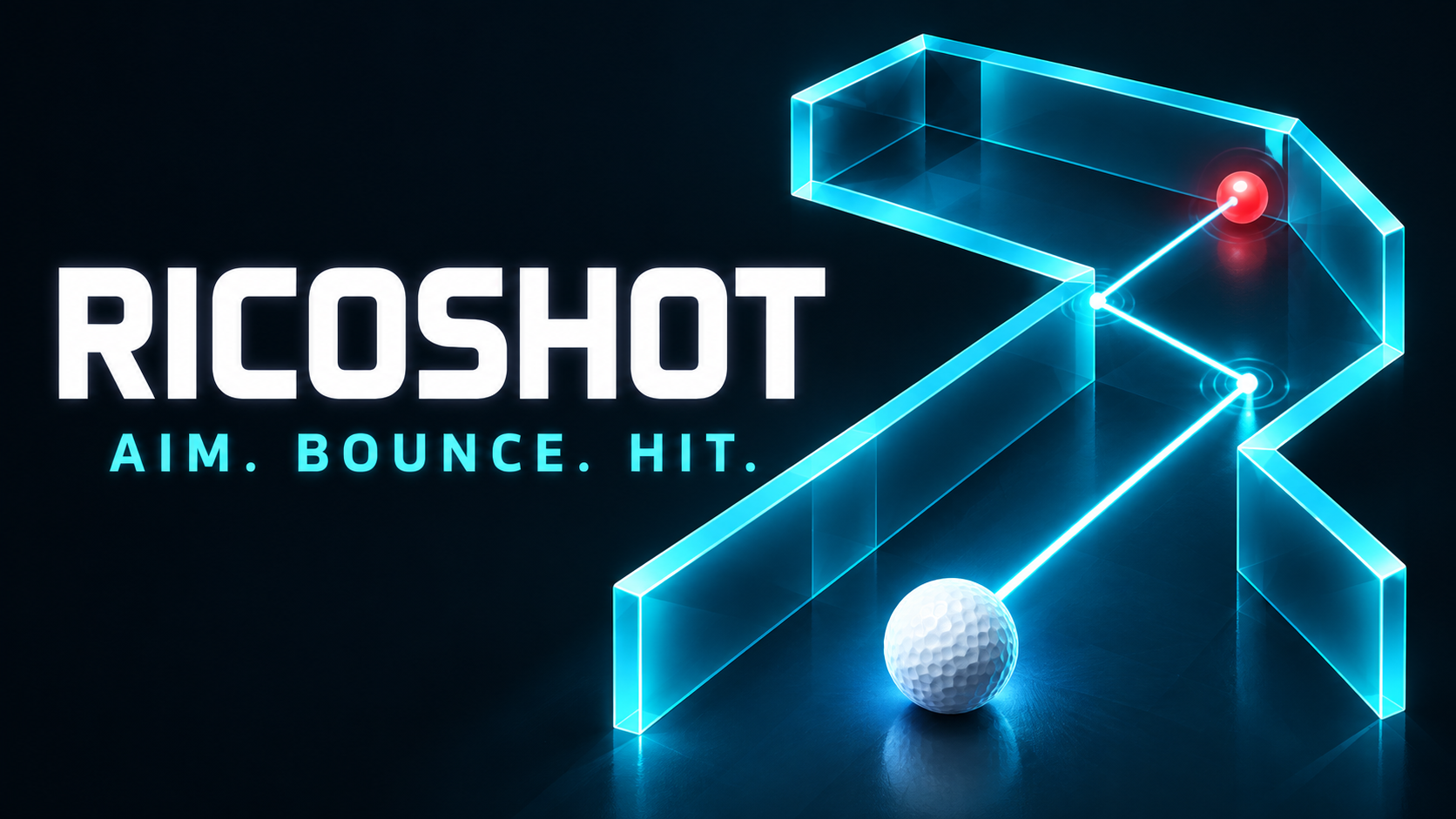
If you enjoy puzzles like Portal, where you picture space and physics in your head to find a way through, our sci-fi 3D golf puzzle RICOSHOT: Golf Puzzle, where you calculate reflections and trajectories to send the ball, offers a similar kind of fun.