What Makes a Good Tutorial: Teaching a Game Without a Manual
From Super Mario Bros. World 1-1, Half-Life, and Mega Man X to Zelda's fairy companions and Undertale: how game tutorials teach well without boring.
If you launch a game for the first time and five text-filled explanation windows pop up in a row, many people start looking for the "Skip" button. But after skipping the explanations, some get lost not knowing the controls and end up quitting the game. A tutorial walks the narrow path between these two failures. Teach too much and it's boring; teach too little and players get stuck.
In this post, we look at why tutorials have become increasingly important, what kinds there are, and how famous games "taught without feeling like they were teaching." Finally, we share the checklist our small studio uses when making tutorials.
Why Tutorials Became Important
Older games were sold with thick paper manuals. Controls, item descriptions, and enemy traits were in the manual, and the game itself often didn't teach them separately. As cost-cutting and digital distribution grew, printed manuals disappeared, and in-game tutorials took over their role.
The tutorial is also a game's first impression. A tutorial that's boring or that holds players on a tight leash leaves a bad impression of the whole game. Conversely, if there's no tutorial at all, players who can't figure out the core rules get frustrated. Mobile games in particular can be installed and deleted in seconds, so if a game can't convey "what this game is and why it's fun" within the first few minutes, it won't get another chance.
The Many Faces of Tutorials
When people hear "tutorial," they tend to picture a separate practice stage, but in reality there are many more forms.
| Form | Description | Examples |
|---|---|---|
| Separate practice stage | A training space separate from the main game | Training modes in many fighting and strategy games |
| Hidden tutorial | An easy first level serves as the explanation | Super Mario Bros. World 1-1, the opening chapter of Half-Life |
| Mentor/companion | A character gives advice when needed | The fairy companions in The Legend of Zelda series |
| Gradual reveal | New rules introduced little by little throughout the game | The Legend of Zelda series |
| Tooltips/tasks | Explanations on mouse-over, to-do lists | Stellaris |
| Left to discovery | Almost no explanation; players figure it out themselves | The original Metroid, Minecraft |
In strategy games, the entire single-player campaign sometimes serves as a long tutorial for multiplayer. The Age of Empires campaign is cited as an example. Rather than one form being correct, most games mix them to suit their complexity and audience.
Condition 1: Let Them Do It, Don't Make Them Read
The first condition of a good tutorial is that "time spent doing" is longer than "time spent reading." People remember rules they've experienced with their hands far better than rules they've read in text.
The first stage of Super Mario Bros. (1985) teaches jumping, blocks, mushrooms, and pipes without a single line of text. When you try to jump over the first Goomba, you end up bumping your head on a question block, so you naturally learn where items come from. Shigeru Miyamoto explained that he designed this stage so that players would gradually and naturally understand what they were doing.
The opening chapter of Half-Life (1998) is also often cited as a "disguised tutorial." It's structured so that the introduction where the story begins is also the time for learning the controls, so players enter the game without feeling like they're going through separate training. These days, it's common to think of the first level as a tutorial whether or not it has explicit explanations, and Half-Life is a prime example of that trend.
Condition 2: At the Moment It's Needed, Only as Much as Needed
If you teach everything at once at the start, players forget most of it. That's why many designers recommend explaining a feature the moment it's first needed during actual play, rather than in a separate tutorial level. The best timing is when the player gets a new item or ability.
In many games in The Legend of Zelda series, a fairy companion gives hints at important moments, briefly speaking up when you're lost or when you first encounter a new device, for instance. Taken as a whole, the series is praised for not telling you everything from the start and instead handing out information little by little throughout the game.
Stellaris, a complex strategy game, is the opposite: because it has so much information, it gently nudges players toward useful actions with detailed tooltips and occasional tasks. Rather than explaining everything, it provides places where you can look things up when you're curious.
Condition 3: Even a Fight You Can't Win Can Teach
A tutorial doesn't have to be kind. Some use the story to teach emotions and goals together.
Mega Man X (1993) has you go through an introductory stage before choosing among the eight bosses. At the end of this stage, which takes place on a highway, the protagonist X can't defeat the enemy Vile, and his ally Zero appears to get him out of trouble. This scene is the starting point of the story and also plants a goal in the player's mind: "X is still weak and needs to get stronger." Mega Man X has many moves the earlier series didn't, such as wall climbing and dashing, so the introductory stage also served as a space to learn them.
Interestingly, not every critic at the time welcomed this structure. Some reviewers said they didn't like the introductory stage. This shows that the same tutorial can be a helpful guide to one person and an unnecessary rite of passage to another.
Condition 4: Don't Hold Back Experienced Players
For someone playing the same game a second time, or someone who has played a lot of similar games, basic explanations are just boring. That's why good tutorials provide a way out for experienced players.
- An option to skip: It's common to make the basic tutorial mandatory and advanced training optional.
- A structure you can get through quickly: So that those who already know can pass in seconds, the tutorial moves on as soon as you perform the action.
- Material you can revisit later: Like video tutorials or an in-game encyclopedia, let players come back and check whenever they need to.
Minecraft is basically a game that leaves things to discovery, but some console versions included an optional "Tutorial World" in the traditional style. It was a choice that considered both groups of players: those who want the fun of discovery and those who want friendly guidance.
Condition 5: The Tutorial Is Part of the Game Too
When a tutorial is treated as part of the game rather than a "gate you have to pass before the main game," it can actually become a memorable scene.
In Undertale, the first character, Toriel, takes her name from "tutorial," and she literally takes the protagonist by the hand and guides the way. The format of the tutorial itself is used as material for the story. Far Cry 3: Blood Dragon parodied tutorials with a scene in which the protagonist gets annoyed at being forced to go through one.
What these examples show is that a tutorial should also carry the game's personality and atmosphere. If the main game is lighthearted but the tutorial alone feels like a stiff manual, the first impression and the actual game won't match.
Our Small Studio's Tutorial Checklist
Here are the items we check when making and fixing tutorials.
- Time to first input: How many seconds does it take from launching the game to actually controlling something?
- One thing per screen: Are we teaching two or more things at once?
- Word count: Can the explanatory sentences be cut in half? Most of the time, they can.
- Is failure okay? If you make a mistake in the tutorial, do you have to start over from the beginning?
- A first-timer's hands: When someone who isn't a developer plays it without being told anything, where do they get stuck?
The last item is the most important. When you run playtests, almost everyone gets stuck at the parts the developers skipped over thinking "of course they'll know this." In the end, testing tells you what the tutorial needs.
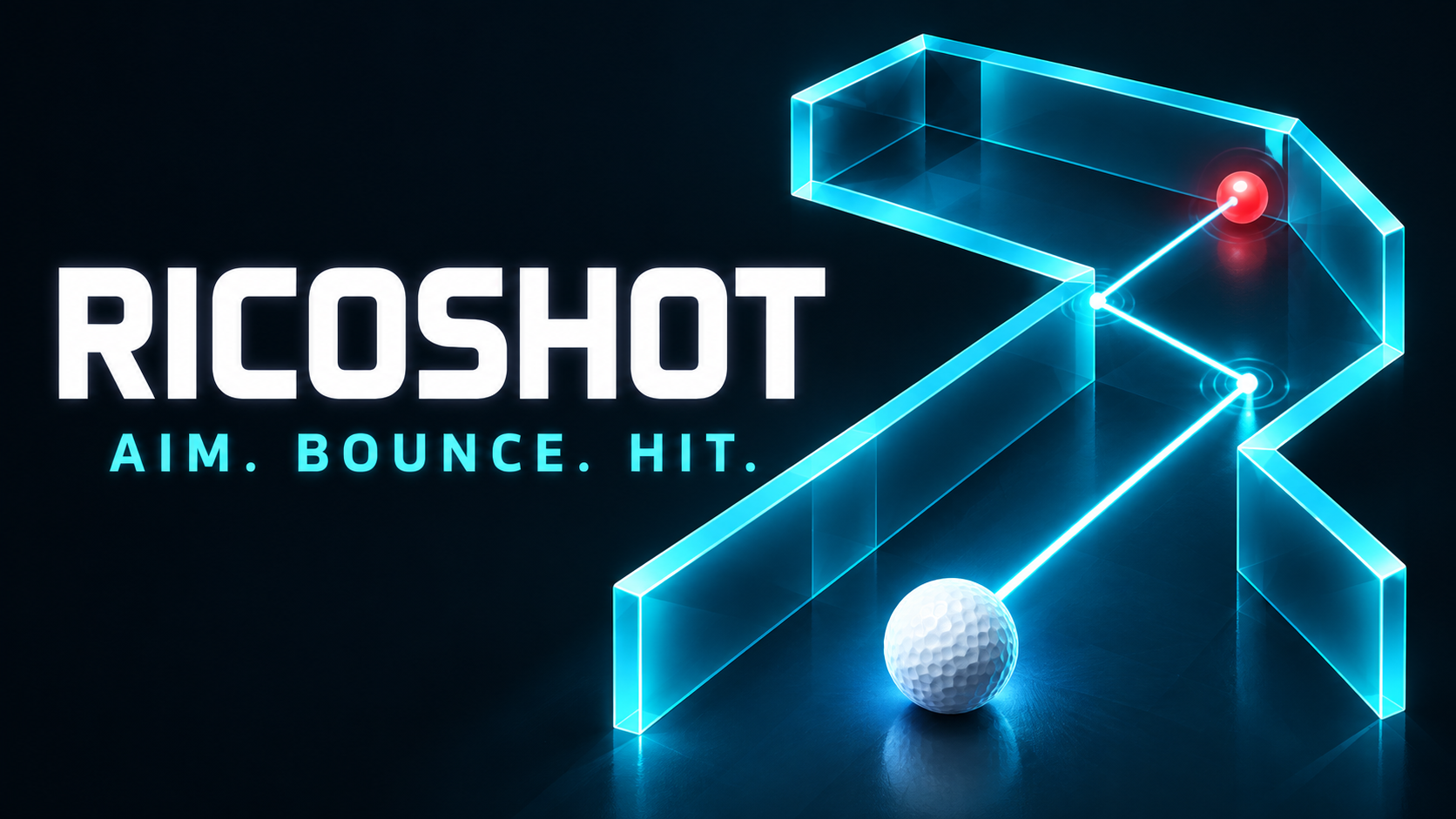
This thinking is in our games too. RICOSHOT: Golf Puzzle shows the predicted trajectory of the ball's bounces on screen, so without any separate explanation, players see the rule "this is how it bounces when it hits a wall" with their own eyes every time. Action Janggi lets you play the first 10 matches for free, giving you time to learn the rules of janggi and the action controls in real matches without pressure.
Closing Thoughts
The best tutorial is the one where you only realize afterward, "Oh, that was the tutorial." When players feel they figured it out while playing rather than feeling they were taught, that knowledge sticks, and the game becomes "my game" faster.